Latest insights
The Gut Microbiome: Influencing Your Decision Making
February 28, 2026
By Shelly Bouse
How the Gut Microbiome Influences Decision Making
Key Highlights
- Your gut microbiome is a group of small living things in your intestines. These tiny things play a big role in your overall health.
- The gut-brain axis is a signal pathway. It lets your gut health talk right to your brain.
- The microbes help break down food. They work with your immune system, and they make some key nutrients.
- If your gut is not healthy, it can change how you feel, give you stress, and change how well your mind works.
- If you eat a lot of dietary fiber from many plant foods, you help keep a healthy gut microbiome.
- What you eat and your use of antibiotics can change the balance of your gut bacteria. Your lifestyle choices play a part in keeping a healthy gut.
Have you ever had a "gut feeling" about something you need to do? That feeling might be more real than you know. Inside your gut, there is a busy world of tiny living things. This world is called the gut microbiome. These little helpers are known as the microbiota. The microbiota plays a big role in your human health. They help with things like digestion and even the way you feel each day. People are now starting to find out how this group inside you can change your thoughts. It can also change your moods and the choices you make every day.
The Gut Microbiome: What Is It?
Think about the human gut like a small, busy world. In this world, there are many living things. This place in your body is called the gut microbiome. It is home to trillions of tiny life forms, such as bacteria, viruses, and fungi. This mix is different for each person. The gut microbiome is important because it helps your body work the way it should.
A healthy gut is very important for your body. A mix of many different microbes lives there, and this keeps you well. Thanks to the Human Microbiome Project, we now know that the small living things inside you do a lot for your health. They are not just sitting there. They really help you feel good. Let’s talk about what the gut microbiome is and see why it matters so much.
Definition and Key Characteristics of the Gut Microbiome
The gut microbiome is all of the tiny life forms and their genes that live in your digestive tract. This microbial community has more than a thousand different bacterial species. Each type has its own job to do. These microbes and you help each other. You give them food and a place to stay.
The human gut microbiota gives many benefits to your body. They help break down food that your body cannot digest by itself. They also make important vitamins for you. The gut microbiota can help keep you safe from bad germs. This group of microbes is a key part of the human body. The human gut depends a lot on the gut microbiota for these things.
The makeup of your gut microbiome changes over time. Things like what you eat, where you live, and how you live can all change it. A wide mix of microbes in the gut is a big sign of good health. This shows how important these small microbes are for your body every day and for keeping you well in the future.
Differences Between Gut Microbiota and Gut Microbiome
People often use "gut microbiota" and "gut microbiome" as if they mean the same thing. But there is a small difference. The gut microbiota is the group of living things in your gut. These are the bacteria, viruses, and fungi. You can imagine them as each being part of a group that lives in your gut.
The gut microbiome is a wider term than the microbiota. This is because it includes the microbiota and all of their genes together. The human genome has about 23,000 genes. But the gut microbiome has millions of genes. This big number gives them power to do many jobs that our own cells just can’t do.
Initiatives like the Human Microbiome Project look at the full set of genes in these small life forms. They want to know how the genes from the microbiota affect our health. So, the microbiota are the living things themselves. The microbiome is the bigger picture. It includes all their genes and what these genes do.
Why the Gut Microbiome Matters for Overall Health
Your gut microbiome has an important role in your overall health. It works like an extra organ in your body. When you have a healthy gut that is full of good gut bacteria, it does more for you than just help with digestion. These gut microbes help your body get important nutrients from the food you eat. They also make important things that your body needs to stay well.
The mix of bacteria in your gut can change your immune system, heart health, and mood. What you eat has a big effect on the bacteria in your gut. A healthy diet can help good bacteria grow. This can give you many health benefits.
Some important things that can help your well-being are:
- Nutrient Synthesis: They make important vitamins like B1, B9, B12, and vitamin K.
- Immune Support: They help your immune system learn how to spot friendly things and things that can hurt you.
- Gut Barrier Integrity: They keep the lining of your gut strong. This stops bad stuff from getting into your blood.
Composition of the Gut and Microbiome
The composition of the microbiome in your gut is made up of many different types of bacteria and other microbes. While there are some microbes in your stomach and small intestine, most of them live in your large intestine. The microbial community is controlled by a few main groups known as bacterial phyla. Everyone has a different mix, so the bacterial profile is unique for each person.
Most of the bacteria found in your gut microbiota are anaerobic. This means that they do well when there is little or no oxygen, like in your colon. To really know how the human gut works, it helps to learn about the many different microorganisms inside it and what affects their balance. Let’s take a closer look at output and find out more about the members of the human gut microbiota.
Types of Bacteria in the Gut Microbiome
Your gut has as many as 1,000 different species of bacteria. Still, most of these gut bacteria belong to just a few main groups. Firmicutes and Bacteroidetes are the two biggest groups, and they make up much of the bacteria in the gut of healthy adults. Some other groups like Actinobacteria, Proteobacteria, and Verrucomicrobia also play a part.
Having many different types of gut bacteria is a good sign of gut health. Each bacterial species helps your gut in its own way. Some break down fiber. Some help make vitamins. If there is an imbalance in the gut bacteria, some can grow too much while others fall, and this can cause health problems. A good balance of microbial diversity is important for your gut health.
These bacteria do many things. They help to break down food that is hard to digest. They also guard the body from harmful germs. The bacteria talk to your immune system and help it work well.
| Phylum | Common Role |
|---|---|
| Firmicutes | Helps break down fats and carbohydrates. |
| Bacteroidetes | Experts at digesting plant fibers. |
| Actinobacteria | Supports gut health and immunity; including Bifidobacteria. |
| Proteobacteria | Includes both helpful and potentially harmful species. |
Fungi, Viruses, and Other Microorganisms
Your gut flora is not just made up of bacteria. There are other, smaller members too. These include fungi, viruses, and simple life forms called protozoa. Even though there are fewer of these than bacteria, they are still important for a healthy gut. For example, some kinds of fungi like Candida can be found in a normal, healthy gut.
Viruses in the gut are mostly made up of bacteriophages. These are a kind of virus that go after bacteria but not human cells. They help control different bacterial species in our gut. By doing this, they keep the number of these bacteria balanced. This helps the whole gut to stay stable and work well.
These other microorganisms mix and work with the bacteria in your body in many ways. Scientists are still trying to find out how they all work together, but we do know they play an important part in your gut health. When all these microbes are in balance, your gut can work well and stay healthy. This balance is what makes your gut a lively and active place.
Factors Influencing the Microbial Balance
There are many things that can change the balance of your gut microbiome. From the day you are born, your microbial community starts to grow and change. It is shaped by what you go through in life and the environmental factors around you. What you eat has the most impact on gut microbiome diversity.
The food you eat helps feed the microbes in your gut. If you eat a lot of different plant fibers, you help have a healthy and mixed group of microbes in your gut. But if you eat a lot of processed foods and sugar, you can help more of the less good microbes grow. Besides food, things like antibiotic use can also change your gut a lot. It can wipe out both good and bad bacteria.
Here are some main things that affect your body’s balance of microbes:
- Diet: The food you eat matters. Food with more fiber is good for you.
- Medications: Antibiotic use can lower microbial diversity by a lot.
- Lifestyle: Things like how much stress you feel, how well you sleep, and how much you move each day are important.
Establishment and Evolution of the Gut Microbiome
The story of your human gut starts right when you are born. In early life, microbes from your mother and the world around you get into your gut. This is a key step. It helps set up the microbial community that will grow and change with you over time.
As time goes on, this community in your body changes a lot. Your age, what you eat, and how you live all shape your gut microbiome. It helps to know how this inner world starts and the way it grows as you move through life. This can help us see how it links to our health. Let's look at how the gut microbiome forms and changes from the time you are a baby up to when you are grown up.
Formation of the Gut Microbiome in Infancy
The base of your gut microbiome is set in early life. This process begins right when you are born. How a baby is born has a big effect. If a baby is born through the birth canal, the baby gets bacteria from the mother’s body. This gives a baby many kinds of microbes at the start. But if a baby comes into the world by C-section, the microbes that get in first come from the skin.
Breast milk is very important for shaping the human gut in a baby. It has things the baby needs and also has special carbs called human milk oligosaccharides. These carbs feed the beneficial bacteria like Bifidobacteria in the body. This makes a healthy gut flora from the start.
As a baby grows and starts to eat solid foods, their gut begins to change. At this time, the variety of things the baby is exposed to, and what they eat, help make a healthy gut. This is important, because these first foods set up their gut to stay strong and support them for all of their life.
How the Gut Microbiome Changes With Age
Your gut microbiome does not stay the same. It changes a lot as you get older. In your early years, like in infancy and childhood, the microbial community in your gut is always changing and growing. When you move into being an adult, your gut microbiome becomes more steady. But the food you eat, how you live, and your health can still change it.
As you get older, the mix of bacteria in your gut keeps changing. In many older people, gut microbiome diversity starts to go down. The number of beneficial microbes may drop, while other bacteria can go up. This can happen because of what you eat, if you move or exercise less, and if you start to take more medicine.
Keeping a diverse and balanced microbial community in your gut is key for healthy aging. As you get older, the changes in your body show how important your relationship with these microbes is, and why you should keep caring about your gut health.
Influences from Environment, Diet, and Lifestyle
Your age is not the only thing that affects your microbiota. The environment around you, the food you eat, and the way you live your life also play a big part. Where you stay, the people you spend time with, and your everyday habits help decide which kinds of microbes live in your gut. These things can help keep your microbes in good balance, or they can throw it off.
What you eat plays a big role in your health. A diet with many plant-based foods helps your body and gives beneficial bacteria the fiber and nutrients they need. This can bring you many health benefits. But if you do not eat a wide range of foods or if you eat a lot of processed foods, there can be fewer types of these bacteria in your gut. This may lead to health problems.
Your lifestyle choices also play a critical role.
- Exercise: Doing regular exercise can help to increase the number of different types of microbes in your gut microbiota.
- Stress: If you feel stress for a long time, it can hurt the mix of your gut bacteria.
- Sleep: Not getting good sleep can disturb the normal patterns of your gut microbiota.
The Gut-Brain Axis: Linking Gut and Mind
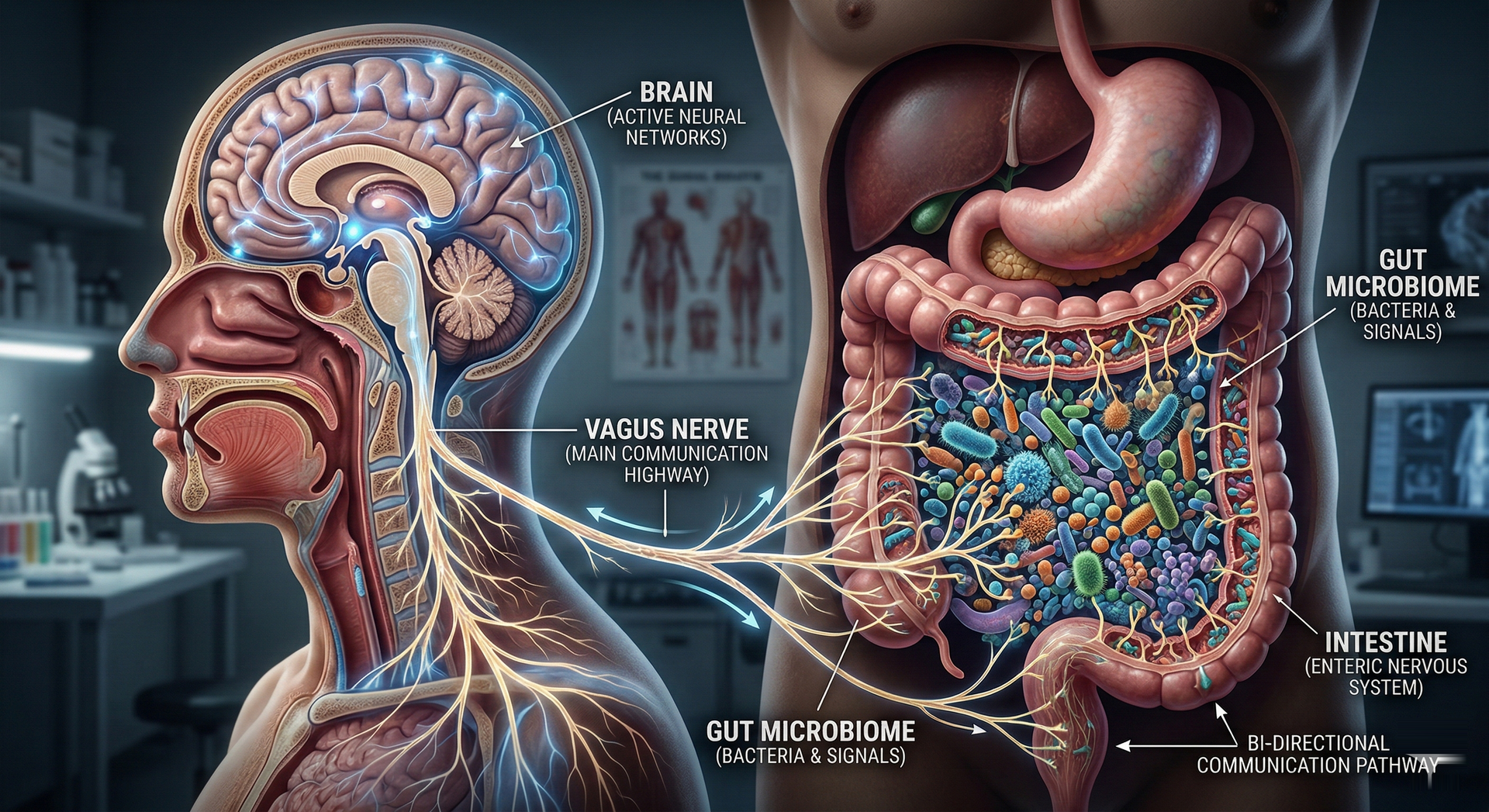
Have you ever had that "butterflies" feeling in your stomach when you feel nervous? That is your gut-brain axis at work. This word means the network in your body that lets your gut and your brain talk to each other. The gut microbiome is a part of this and it can shape the way your central nervous system acts.
This connection shows that what goes on in your gut can affect other parts of your body. The tiny life forms in your gut can send out messages. These messages can change how you feel, how stressed you are, and even how well you think. Now, let's look at the body systems that help make this strong link happen.
The Biological Pathways Connecting the Gut and Brain
The gut-brain axis is not just one link. It is a group of several paths working together. The strongest line between them is the vagus nerve. It is like a fast road that carries signals back and forth from the gut to the brain. This helps send messages very quickly and can change things like digestion and how you feel.
Another main way this happens is through the immune system. The gut has a lot of immune activity. The microbes in your gut help "train" immune cells. These immune cells go all over the body and send out signals. Some of these signals can reach and affect the brain. This can help control brain health and how the brain works.
Gut microbes make many things like neurotransmitters and short-chain fatty acids. These can get into the blood. The molecules travel to the brain and affect how it works. This shows the gut and brain are linked in many ways.
How Neurotransmitters Are Produced in the Gut
You might not know it, but your gut makes a lot of neurotransmitters. These are chemical messengers used by your nervous system. A big part of the body's serotonin, which is sometimes called the "feel-good" neurotransmitter, is made in your gut. Even though this serotonin from the gut does not go into the brain, it helps the gut work well. It can also send messages to the brain by way of the vagus nerve.
Some types of gut bacteria help in this process. They make neurotransmitters like GABA, dopamine, and norepinephrine. There are other bacteria that help the cells in your gut lining make these important chemicals. A healthy gut with many kinds of gut bacteria is needed to keep this going.
The byproducts that come from bacterial digestion are called short-chain fatty acids. They help support your brain health. These fatty acids can change the way your body makes some neurotransmitters. A healthy gut can help keep your mind healthy too. This shows there is a clear link between a healthy gut and a healthy mind.
Ways the Gut Microbiome Sends Signals to the Brain
The gut microbiome has many ways to send messages to your brain. This happens along what is called the gut-brain axis. The gut and brain talk to each other all the time, even when you do not feel it. These signals can change your mood, how you feel, and how your mind works. They travel through different things in your body to get where they need to go.
One main way gut bacteria help the brain is by making short-chain fatty acids. When these bacteria break down fiber in your body, they make these fatty acids. The fatty acids then move into your blood and reach the brain. There, the fatty acids can change how the brain works. They also help keep the blood-brain barrier strong.
Gut microbes also help send messages to the body’s nerves and immune system. Here are some of the main ways they do this:
- Neurotransmitter Production: Gut bacteria help to make or start the making of things like serotonin and GABA. These two are known as neurotransmitters.
- Vagus Nerve Stimulation: There are things made by gut bacteria that can turn on the vagus nerve. This nerve goes right from your gut to your brain, so signals move fast.
- Modulating Immune Responses: The gut microbiome can guide immune cells. These cells let out cytokines. These can change brain activity.
Main Functions of the Gut Microbiome in the Body
The gut microbiome has an important role in how your body works each day. The tiny microbes inside you do much more than just live there. They help with digestion. They also support your immune system. These little things are active in keeping you healthy.
These tiny living things help to break down foods that you can not digest. They also make important vitamins for the body. On top of that, they help keep you safe from germs that can cause sickness. When you look into these main jobs, you see why it is so important to have a healthy gut. A healthy gut microbiome is really good for you. Now, let's take a look at some of the main things these microbes do.
Digestion and Nutrient Absorption
One of the main jobs of the gut microbiota is to help with digestion. Your own body can't break down every type of carbohydrate, like dietary fiber and resistant starch. The gut microbes in your large intestine step in to help. They break down these fibers by fermenting them, so your body can use the compounds they make.
When this process happens, it makes short-chain fatty acids. These fatty acids are an important source of energy for the cells in your gastrointestinal tract. They help keep the lining of your gut healthy and strong. This is needed for your body to take in the right nutrients and stop bad things from getting into your blood.
The gut microbiota works with the body to make vitamins you need. These include vitamin K and several B vitamins. You cannot make these vitamins by yourself. The gut microbiota helps you get more good value from the food you eat. This helps support your overall health and keeps you well from the inside.
Defense Against Pathogens and Supporting Immunity
Your gut microbiome is an important part of your body's defense. A healthy gut that is filled with good gut bacteria can help protect you from harmful germs. These good microbes fight with bad ones for space and food. This makes it hard for germs that cause sickness to take hold and spread.
This process is sometimes called "colonization resistance." It happens when beneficial bacteria live on the lining of your gut. They take up space, so harmful bacteria cannot stay there and cause infections. Some beneficial bacteria can also make certain things that stop or slow the growth of germs.
Your gut microbes are important for your immune system. They help your immune cells know the difference between friendly bacteria and invaders. This talk between your gut microbes and immune cells helps your body know when to react to a threat. A healthy gut can stop your body from having too much inflammation and helps keep your immune responses on track.
Contribution to Metabolism and Hormone Regulation
The bacteria in your gut play a big role in how your body uses energy and controls hormones. When the bacteria break down food, they make things called short-chain fatty acids. The body uses these fatty acids for energy. These fatty acids also send signals in your body. They help decide how you store fat and how you manage blood sugar. Because of this, your gut is very important for keeping your metabolism healthy.
The gut is the largest organ that makes hormones in your body. The gut bacteria are in direct contact with the cells that make these hormones. These hormones from the gut help control your appetite and hunger. They also let you feel full. If you have an imbalance in your gut bacteria, these signals may not work right. This can lead to problems like obesity and metabolic syndrome.
A healthy gut microbiome helps your body get energy from food. It also affects the hormones that control your body's metabolism.
A good balance of the microbial community in your gut can help keep your weight in a good range. It may also lower the risk of getting some metabolic diseases. This shows that these small helpful microbes in your gut are very important for your well-being and you get big health benefits from keeping a healthy gut.
The Gut Microbiome’s Influence on Decision Making
The thought that small germs in your gut can help you decide things may look like something from a movie. But now, studies show that it is real. Through what we call the gut-brain axis, the gut microbiome can change your brain health. It can also shape your mood and the way you think. All these things play a big part in the choices you make.
This connection shows that the health of your gut can be tied to many things. It could change how you act with other people or even what choices you make with your money. As we find out more about this link, we see new ways to help the mind work better. Let's take a look at research about the gut and mind connection.
Research on the Gut-Mind Connection
Many people are now interested in the gut-brain axis. A lot of new research shows the gut microbiome can shape brain health. Studies done with both animals and people suggest there are strong links between the bacteria in our gut and how we feel or think.
For example, when the gut microbiome is changed in mice, their behavior also changes.
A systematic review of studies shows that tiny life forms in the gut make things that talk to the nervous system. People who do research are now looking into how these signals could play a part in problems like anxiety, depression, and some brain illnesses. The proof shows that it goes both ways. The brain can also send signals back to the gut.
Much of this research is still new, but the results look promising. Scientists are trying to learn how it happens. It is becoming clear that a healthy gut is very important for a healthy brain. The gut microbiome works as a main link between your gut and your brain.
Impact on Emotions and Stress Levels
Your feelings and how you deal with stress are closely linked to how healthy your gut is. The microbiota in the gut can change how your body makes important chemicals like serotonin and dopamine. These are important to your mood. When there is an imbalance in gut bacteria, you may feel more anxious or sad.
When you feel stress, your gut health can get worse. This may change the gut bacteria inside you. The problem can then become a cycle because stress can harm the gut. A gut that is not healthy can make you feel even more stress. This back-and-forth shows how your mind and gut health are closely linked.
When you keep a good balance of gut bacteria, you can feel more in control of your emotions. It can also help you handle stress better. This is good for how well you think, because high stress and bad feelings can make it hard for people to think straight or make good choices.
Gut Microbiome Effects on Cognitive Performance
The human gut microbiota can do more than just affect your mood. It can also have a direct effect on how your mind works. This means it can help with things like your memory, focus, and learning new things. Some studies say that people who have a healthy mix of gut bacteria in the human gut do better when it comes to these skills. A diverse and healthy human gut microbiota is good for your mind.
The way that gut bacteria and brain health connect can be hard to explain. Gut bacteria can help your brain in a few ways. They can lower swelling in the body. They can also make some important nutrients. Gut microbes can change the levels of certain brain chemicals, too. For example, the fatty acids made by gut microbes can help protect the brain and keep brain cells working well.
An unhealthy gut can lead to brain fog and make it hard to focus. There is still research happening, but many signs show that gut bacteria play a big role in how sharp your mind is. Taking care of your gut may help you think better and feel more alert. Keeping your gut healthy could be a good way to give your brain a boost.
Biological Mechanisms Shaping Decision Processes
The gut microbiome can change what you pick to eat. This is not magic. It is all about how your body works. There are several ways in which messages go from your gut up to your brain. These messages can change how you feel and what you want.
The body uses molecules to send you these signals. Some of these molecules are short-chain fatty acids, some are hormones, and some are signals that cause swelling. All these ways help your brain and body talk to each other.
When we know how these pathways work, we can see how having an imbalance in the gut microbiome might lead to changes in mood, the way we see risk, and the choices we make. Let's look at the roles of these compounds and processes that come from the gut.
Role of Short-Chain Fatty Acids (SCFAs)
Short-chain fatty acids, or SCFAs, help connect your gut and your brain. These fatty acids—like butyrate, propionate, and acetate—come from the work of good gut bacteria. The gut bacteria make them when they break down dietary fiber in your colon. SCFAs give energy to the cells lining your gut. This helps the gut stay healthy.
But their reach goes beyond this. SCFAs can move through the blood-brain barrier. They can change how your brain works. For one, butyrate is shown to lower swelling and help new nerve cells grow. Because of this, SCFAs are very important for brain health and also help your mind work well.
The molecules made by your gut bacteria can have a big effect on your mood and how your brain works. They do this by playing a role in inflammation and keeping brain cells healthy. If you eat foods with a lot of fiber, it helps your body make good short-chain fatty acids. This supports your gut and your mind. Fatty acids and gut bacteria are important for good health.
How Gut-Derived Hormones Affect Brain Function
Your gut makes a lot of hormones, and gut microbes help with this. These gut microbes play a big part by helping to release hormones that control things such as how hungry you feel or how stressed you are. These hormones move through your blood and talk to your brain. They can change how you feel and act.
For example, the gut bacteria can change how much of the hunger hormones like ghrelin and leptin the body makes. This can change how these signals work, and it may make you want to eat different foods. Because of this, your gut can send signals to your brain about what it needs.
The gut microbiome helps control stress hormones, such as cortisol. When your gut is balanced, it can help your body handle stress better. But if the gut is not balanced, it can lead to ongoing stress. This ongoing stress is not good for the brain and can affect how you make choices. All this shows that the way the body manages hormones is one more way the gut and brain health are linked.
Inflammation, the Gut, and Its Effect on Choices
Inflammation happens in the body for a reason. It has to be there to keep us safe. But if it does not go away and stays for a long time, it can hurt many parts of the body. This can even include the brain. The gut microbiome is very important for how it controls inflammation in us. A healthy gut helps the body keep its inflammatory response balanced. But if your gut is not healthy, it can lead to inflammation that does not stop and stays low for a long time.
When the gut microbiome is not balanced, the wall of the gut can get weak. This lets some bacterial toxins move into the blood. This can start an inflammatory response because immune cells try to fight what they think is a threat. Then, these inflammatory signals can go to the brain. This may cause a type of swelling in the brain called neuroinflammation.
This brain inflammation can stop the brain from working well. It can change how you feel, think, and act. It is linked to things like depression and anxiety. It can also make it hard for you to make good and clear choices. If you keep gut inflammation down, you can help protect your brain. This will help you make better choices and feel better.
Signs and Symptoms of an Unhealthy Gut Microbiome
How do you know if your gut microbiome is not balanced? There are signs that you can look for. Some of these are easy to see, while others are not so clear. You may feel the signs as stomach problems. Or, you might feel changes in the way you think or feel. These signs can be both in your body and mind.
Noticing when your gut microbiome is out of balance is the first thing you should do to help your gut health. If you do not fix these problems, it can hurt your immune system and other parts of your body. This may cause more health problems as time goes by.
Here are some signs you might have an unhealthy gut, both in your body and in your mind.
Physical Indicators (Digestive Issues, Fatigue)
The most clear signs that your gut is not healthy show up in your digestive system. If you have problems like gas, bloating, constipation, diarrhea, or feel pain in your belly, it can be a sign that things are not right in your gastrointestinal tract. These problems may mean that the gut microbes are not breaking down food well, or there could be too many bacteria that make gas.
Another usual problem you may feel is being tired all the time. Gut health helps the body make energy and take in nutrients from the food you eat. If your gut is not healthy, you may not get all the energy from your meals. A gut that is out of balance can also cause redness and swelling on the inside and make sleep worse. Both of these things can make people feel tired.
These signs you feel in your body show that your gut needs care. A healthy gut and a healthy gut microbiome can help you feel better. Fixing your gut health can often take away these signs. You will feel better and your body will thank you.
Mental and Emotional Symptoms
The way your gut and brain talk to each other means that problems in your gut can show up in how you feel and think. If your gut is not healthy, you may feel more anxious, sad, or have mood swings. This can happen when there is an imbalance of gut bacteria. The gut bacteria help make the chemicals that control your mood and feelings.
You may feel “brain fog,” where your mind seems cloudy, it’s hard to focus, and you have trouble remembering things. This can happen when your gut is not healthy and causes swelling or sends signals that affect your brain health. The nervous system is very quick to react to these signals.
Also, when your gut is not balanced, you can feel stress more easily. You may feel that you cannot handle daily problems or feel upset a lot. This may be linked to your gut health. It is important to notice these feelings and not just focus on signs you feel in your body.
Long-Term Health Complications
An unhealthy gut microbiome can cause more than just short-term problems. It may lead to serious health issues that last a long time. When you have an imbalance in your gut bacteria for a while, it has been linked to different diseases. These can be digestive disorders, but they can also be problems in other parts of the body.
Many of these problems happen because of long-term swelling in the body, and that can start if the gut is not healthy. For example, gut dysbiosis is one of the main reasons for inflammatory bowel disease. This includes troubles such as ulcerative colitis and Crohn’s disease. It is also linked to irritable bowel syndrome.
The effect is not just inside the gut. Research shows there be a link between gut imbalances and a bigger risk for many other problems. Some possible long-term health issues are listed below:
- Cardiovascular disease
- Type 2 diabetes and obesity
- Some types of cancer, like colorectal cancer
Maintaining a Healthy Gut and Microbiome
The good news is you can do a lot to help your gut health. The things you eat and how you live matter. When you make good choices, you help your human gut stay healthy. A strong human gut microbiome will grow if you look after it. When you care for the beneficial microbes in your gut, it helps all of you feel well. Your body will thank you for it.
To keep a healthy gut, you need to give food to the good bacteria inside your body. It also helps to follow habits that keep things in balance. Here are some good ways to keep a healthy gut. It can start with the food you eat and go on to the things you do every day.
Dietary Choices That Support Microbial Health
What you eat has the biggest effect on the way your gut bacteria grow. A healthy diet that has many plant foods is very important. These foods are full of dietary fiber. Your gut bacteria need this fiber to stay healthy and strong. When you eat a lot of different plants, you help many kinds of bacteria grow in your body.
Foods that are high in fiber, such as fruits, vegetables, legumes, and whole grains, are good for your gut health. Some fiber, called resistant starch, can help your body make healthy fatty acids. If you add these foods to your meals each day, you can help your gut work better.
To help your microbial health, try to add these to your diet:
- Variety of Plants: Try to eat many kinds of fruits, vegetables, and beans.
- Whole Grains: Pick whole grains like oats, quinoa, and brown rice instead of white or refined grains.
- Foods with Resistant Starch: Add foods like green bananas and potatoes that have been cooked and cooled. These foods with resistant starch and whole grains can give you good health benefits for your gut and the rest of your body.
Probiotics, Prebiotics, and Synbiotics Explained
You may know about probiotics and prebiotics. But what do they really do? Probiotics are live, helpful bacteria. When you eat them, they add to the good bacteria in your gut. You can find these beneficial bacteria in fermented foods like yogurt and kefir. They are also found in some supplements. Probiotics can help bring back balance in your gut if things go off.
Prebiotics are a type of dietary fiber. They give food to the gut bacteria already in your body. This fiber is the fuel that helps your beneficial bacteria grow and stay healthy. You can get prebiotics from eating garlic, onions, bananas, and whole grains. They work like fertilizer and help your good bacteria do their job.
Synbiotics are made up of both probiotics and prebiotics. They give you the helpful bacteria along with the food the bacteria need to grow. This smart way can help keep your gut healthy and support the beneficial bacteria in your body.
Everyday Lifestyle Habits to Foster Gut Balance
The way you live every day affects your gut health. When you move your body and do regular exercise, it helps your gut in a big way. Even if you do not change what you eat, being active helps increase microbial diversity in your body. It also helps the growth of good bacteria, which is important for your gut health.
Getting good sleep every night is very important to have a healthy gut. Your gut also follows a daily pattern, like its own clock. If you do not get enough sleep, it can disturb this pattern and hurt your gut microbes. Try to get 7 to 8 hours of steady sleep every night to help your healthy gut and support your gut microbes.
Managing stress is also important. When you feel stress all the time, it can change how your gut microbiota works. Try to handle stress in good ways. You can use mindfulness, enjoy hobbies, or spend time in nature. These things can help keep your gut healthy. When you practice these small habits every day, it can help your gut microbiota stay strong and balanced.
Foods and Dietary Patterns for a Healthy Gut Microbiome
Building a healthy gut microbiome starts with what you eat. When you pay attention to certain foods and how you eat, you help your gut microbes get the fuel they need to do well. A diet with a lot of dietary fiber from fruits, vegetables, and whole grains is key for good gut health. Eating this way supports a healthy gut and keeps your gut microbes strong.
Choosing a way of eating like the Mediterranean diet is a good idea. This kind of diet focuses on whole foods and many kinds of plants. It can really help your gut feel better. Now, let’s look at what foods can help your gut to grow strong and stay healthy.
Fiber-Rich Foods and Their Benefits
Dietary fiber is important for good gut health. Your body cannot break it down, so it goes into your large intestine. There, your helpful gut bacteria use it as food. They break it down and make short-chain fatty acids. These fatty acids can give your body many health benefits. Fiber helps support both your gut bacteria and your overall health.
Including many foods high in fiber is good because the bacteria in the gut like different fibers. When you eat lots of plants, you help your microbial community stay healthy. Try to add whole grains, legumes, fruits, and vegetables to every meal. This can help you get more fiber and feel better.
Here are some good ways to get more fiber in your food for better gut health:
- Legumes: Lentils, chickpeas, and beans have a lot of fiber in them.
- Whole Grains: Oats, barley, and quinoa are good choices for whole grains.
- Fruits and Vegetables: Berries, apples, broccoli, and leafy greens are all good options.
Fermented Foods and Their Role
Fermented foods are a great way to improve a healthy diet. The way they are made is by using small things like bacteria and yeast to change the food. This helps to keep the food safe for a long time. It also makes the food full of good and live microbes. These are called beneficial microbes.
When you eat fermented foods such as yogurt, kefir, kimchi, and sauerkraut, you add good bacteria right into your gut flora. These probiotics can help with better digestion. They can also support your immune system. This can help keep the balance of the tiny microbes in your gut healthy.
Many fermented foods have good things in them that come from how they are made, like lactic acid. This can make the inside of your gut the kind of place where good bacteria grow and bad ones do not. Eating different types of fermented foods is a tasty way to help your gut feel good.
Foods to Limit for Gut Health
Some foods are good for gut health, but some can hurt it. The way you eat can make your gut unhealthy. This happens when you feed the wrong microbes and cause swelling inside your gut. Foods that are very processed are not good for your microbial balance.
Foods that have a lot of added sugar can help yeast and other bacteria grow in your gut. This can throw off the balance of things inside you. Diets that are high in unhealthy fats and have low fiber can also hurt your gut. These kinds of foods can make microbial diversity go down and can cause a leaky gut.
To keep your gut health good, you should try to cut down on these foods:
- Processed Foods: These foods can have preservatives and other additives. They might not be good for your gut bacteria.
- Sugary Drinks and Snacks: A lot of sugar can help the wrong microbes to grow. This does not help your gut bacteria stay healthy.
- Artificial Sweeteners: Some studies say that a few artificial sweeteners can change your gut bacteria in a bad way.
Impact of Medications and Antibiotics on the Gut Microbiome
While some medications can help save lives, they can also affect the gut microbiome in a big way. Antibiotic use is known for its effects on the gut. These drugs work to kill bacteria, but often, they do not tell the difference between the bad germs and the good, beneficial bacteria in your gut.
This can cause a big change in your gut microbiome diversity. Sometimes this change can last for a long time. It is very important to know how these drugs affect your gut and what you can do to help it get better. Let's look at what antibiotics do to your gut and ways to help your gut bounce back.
How Antibiotics Disrupt Gut Microbial Diversity
Antibiotics can fight bacterial infections well. But they work like a blast in your gut. When you use them, they kill many bacterial cells in your body. They do not just kill the ones that make you sick. This can lower the microbial diversity in your gut by a lot.
When this happens, your gut microbiome can get out of balance. This lets stronger or new microbes take over. Sometimes, this can cause another infection, like C. difficile. This can happen because the good bacteria that protect you are not there anymore to keep it under control.
Even one course of antibiotics can change the way your gut microbiome looks and works for months or more. There are times when you need antibiotic use. But it is good to know that they can also harm the good bacteria in your body. So, you should use antibiotics only when you really need to.
Strategies for Recovery After Antibiotic Use
If you need to take antibiotics, there are things you can do to care for your gut health while and after you finish your pills. You want to help your beneficial bacteria get better and bring back microbial diversity. A good way to begin is by having a healthy diet.
Eating lots of foods that are high in fiber and some that are fermented can help bring back good bacteria into your gut. These also give the good bacteria what they need to grow. When you take antibiotics, it can help to use a good probiotic supplement. You may want to keep using this after antibiotic use as well. It can help put back some of the good bacteria that were lost.
In serious cases where there is a lot of disruption, like having C. diff infections again and again, you may need more advanced treatments.
- Dietary Focus: You should eat a healthy diet. Try to eat a lot of fiber and some fermented foods. This will help you feel good.
- Probiotics: You can take a probiotic supplement. It helps your body have more beneficial bacteria.
- Fecal Microbiota Transplantation (FMT): If things get very bad, there is a way to get beneficial bacteria from someone with a healthy gut. This is called fecal microbiota transplantation. It may help their microbiome.

Looking to reprogram your gut biome?
We've found Super-Biome Probiotic + Prebiotic from JuicePlut+ is the perfect product.
1 capsule + 1 stick pack = 20 Billion CFU of Probiotics, 9 carefully chosen proven bacteria species, and 6 types of prebiotic fiber. The result? A balanced microbiome - because probiotics need the power of prebiotics to thrive and build a healthy gut.
Two-thirds of adults report struggling with gut issues such as bloating, irregularity, or sluggish digestion, often because their gut microbiome is out of balance or because most products only address half the problem by only delivering probiotics. What makes Super-Biome different is its unique 2-step approach: probiotics to deliver good bacteria and prebiotics to feed them.
Knowing how the gut microbiome affects your choices is important for your body and mind. The gut does more than help you digest food. It is also key in shaping your mood, how you think, and the way you make choices in life.
If you are facing a legal issue such as divorce or a business dispute starting with gut health might not seem directly related, but understanding the profound connection between your gut microbiome and overall well-being can influence your mental clarity and emotional resilience during stressful times.
When faced with the complexities of legal challenges like divorce or business disputes, maintaining a balanced gut can foster healthier decision-making processes. A well-functioning gut supports optimal brain function, which is crucial when navigating emotionally charged situations. By prioritizing a diet rich in fiber and fermented foods, you’re not only nurturing your beneficial bacteria but also boosting your cognitive capabilities.
Consider incorporating mindfulness practices alongside these dietary changes. Doing this could surprisingly impact your overall well-being during stressful times. Just as a balanced gut can enhance mood and cognitive function, neglecting it can amplify feelings of anxiety or stress.
When navigating challenging situations, maintaining a focus on gut health might empower you to approach problems more thoughtfully. Aiming for a diet rich in whole grains, fruits, and vegetables not only nourishes your body but also serves as a buffer against the toll that stress can take. Incorporating fermented foods like yogurt, kefir, or sauerkraut helps restore balance within the microbiome, promoting resilience during turbulent periods.
If you keep a healthy gut by eating well, using probiotics, and living a balanced life, you can feel clearer in your head and feel better about things too. If you want to know more about how to look after your gut health and see how it might change the way you make decisions, feel free to reach out to us for help and tips that fit you. A healthy gut microbiome can give you many good days!
Frequently Asked Questions
What are common diseases linked to gut microbiome imbalance?
An imbalance in the gut microbiome can lead to several health problems. Some of these are digestive issues like inflammatory bowel disease and irritable bowel syndrome. It can also raise your risk of getting colorectal cancer. There are other problems, too, like obesity and type 2 diabetes. Some autoimmune disorders are also linked to this.
Can changing my gut microbiome improve my decision making?
Yes, new research says it can help. If you work on your gut microbiome, it can make a good change in the link between your gut and brain. This may help your brain health, make stress go down, and boost your mood. All of this is good for your thinking and helps you make better choices by giving support to the nervous system and central nervous system.
How long does it take to rebuild a healthy gut microbiome?
The time it takes for the human gut to recover and get a healthy gut microbiome can change for each person. If you start eating better, you may notice changes in just a few days. But if your microbial diversity was hurt by something big, like antibiotic use, it can take weeks, months, or even more time to get back to normal. It is important to stick with a healthy way of living to help your human gut heal.
Other insights
More from BOUSE Mediation