Latest insights
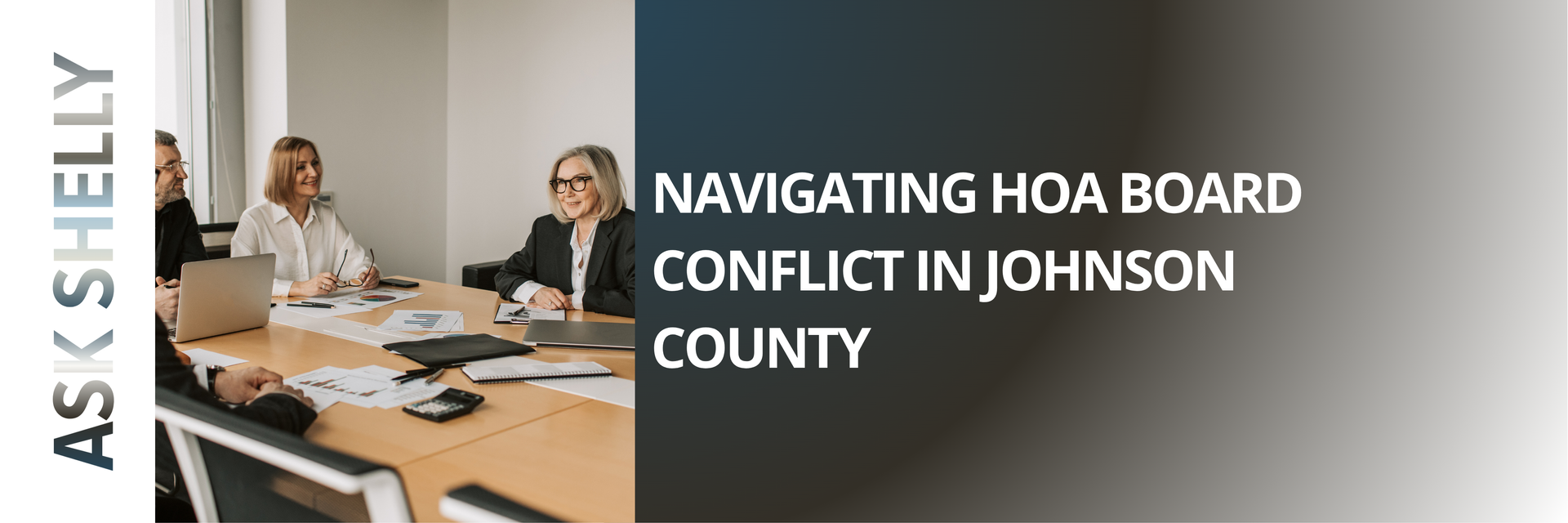
Navigating HOA Board Conflict in Johnson County
April 9, 2026
By Shelly Bouse
Navigating HOA Board Conflict in Johnson County

Key Highlights
- Understand the common sources of HOA board conflict, from financial disagreements to rule enforcement issues.
- Recognize the legal and fiduciary duties of HOA board members in Johnson County to act in the community's best interest.
- Learn to identify and address conflicts of interest to maintain transparency and trust within community associations.
- Explore effective conflict resolution strategies, including open communication and alternative dispute resolution methods like mediation.
- Discover how mediation services offer a neutral, cost-effective path to resolving disputes without resorting to litigation.
- Implement best practices for preventing future disputes through clear policies and ongoing board member education.
Being on a HOA board in Johnson County means you have big tasks to handle. The main aim is to keep things good in the community, but problems between people on the board can still happen. When the board members don’t agree, this can stop work from getting done and can cause trouble in the community. Knowing how to deal with fights within the group matters a lot for any HOA board.
This guide helps you know why board problems start and shows ways for dispute resolution that work well. It talks about the need to sort out issues in a good way without going to court, by following the governing documents and making sure things are done in a fair way.
Understanding HOA Board Conflict in Johnson County Kansas
Disagreements in an HOA board often start when people see the governing documents or state laws in different ways. These hoa disputes can stop the board from making choices and can lead to a bad feeling for all who are part of it. In Johnson County and in many other places, these problems can grow fast if they are not dealt with.
For community associations to work well, the board needs to know why these conflicts happen. If your hoa board finds out what starts and causes these hoa disputes, it can come up with ways to stop problems early and solve them in the right way. This helps keep the community happy and running smooth. The next sections will talk about the main causes and types of problems the board may face.
Common Causes of Disputes Among HOA Board Members
What are the most common causes of conflict on HOA boards? Problems between hoa board members usually come from the same sources. There may be differences in how they want to handle the community's money, how they think about the enforcement of rules, or what each board member thinks the governing documents mean. When they do not listen to each other, arguments about power can start. This makes talking things out much harder.
There are often other things that add to the problem. These can be different interests or not enough experience with hoa management. Volunteer hoa board members may not always have the same ideas about what is good for the community. That can make it hard for them to agree on how to handle the budget or how to look after property values. Each board member must remember that the job is to help the whole community, not to do what only works for them.
Some of the most common sources of disputes are:
- Disagreements over financial choices like how the budget should be spent or if assessment fees should go up.
- Rules and covenants are not enforced the same way for everyone.
- Personality conflicts and trouble with board members talking with each other.
- Different ways people describe state laws or what the governing documents ask for.
Types of Board Conflicts Frequently Seen in Johnson County HOA Communities
What types of disputes are most frequently seen with HOA boards? In Johnson County, HOA disputes manifest in several predictable areas. Conflicts often erupt during HOA meetings over financial management, particularly the allocation of funds for maintenance of common areas versus new projects. Another major point of contention is the enforcement of rules, where accusations of selective or overly aggressive enforcement can divide a board.
These issues highlight the challenges volunteer boards face. Board members may disagree on how to handle parking violations, architectural requests, or resident complaints, leading to internal strife. Lack of transparency in decision-making can further erode trust among board members and the homeowners they represent.
Here is a breakdown of common conflict areas:
| Conflict Category | Examples of Disputes |
|---|---|
| Financial Management | Disagreements on budget priorities, reserve fund allocation, and the collection of dues. |
| Rule Enforcement | Inconsistent application of rules for parking, property maintenance, and use of common areas. |
| Board Governance | Clashes over decision-making processes, lack of transparency, and perceived bias in board actions. |
| Architectural Changes | Disputes over approving or denying homeowner requests for property modifications. |
How Regional Differences Impact Conflict Dynamics
The way HOA conflicts happen in Johnson County can be different because of local things. The community standards and what people expect really shape how board members think about their jobs. For example, if there is a lot of new growth or changes in the people who live there, some may want to update the community rules. Others may want to keep things the same, so there can be arguments about changing the look and feel of the area.
Also, Kansas state laws give the rules that all HOAs need to follow. The board has to look at both state laws and their own governing documents. How they understand these rules can lead to problems inside the board. Sometimes what is normal in another place does not fit with Kansas HOA law. This can confuse people and lead to arguments, especially since not all board members know the law the same way.
To handle all these local issues, it is important for the board to focus on learning and talking clearly. Johnson County boards need to know about local rules and state laws. This helps them make choices that match the law and fit what the community wants. It’s a good way to stop problems before they start and to fix them if they come up.
Identifying Conflict of Interest Within HOA Boards
A conflict of interest means that a hoa board member could have their own interests. These might be about money or their job, and can make it hard for them to make fair choices for the community. This goes against their job to always do what is best for the hoa association. Knowing how to see and handle these conflicts is key to having good and honest hoa board work.
In HOA law, board members must say if they might have a conflict of interest. They also often should not vote on those issues. If they don't do this, people may stop trusting the HOA board and the HOA could face legal challenges. It is very important to know how to spot and manage conflicts of interest so everyone can trust the HOA board. The next parts will help you know how to find, understand, and deal with conflicts of interest.
Spotting Potential Conflicts of Interest
It can be hard for an HOA board to spot a conflict of interest among the members. The first thing to do is pay close attention and watch for times when a board member’s personal life might cross over with their job on the board. A conflict of interest does not always mean someone is intentionally doing something wrong. Most of the time, it can happen by accident if a board member has a tie to a choice that could help them, their family, or friends – even if it happens in a small way.
Your HOA board needs to have a clear rule in the governing documents. This rule must say what counts as a conflict of interest and also explain how to tell others about it. With this, you give everyone a way to know what to do. Then people on the board can feel safe coming forward if a conflict shows up. Go over this rule out loud at regular HOA meetings so it stays fresh on everyone’s mind.
You should keep an eye out for things like:
- A board member who pushes for choosing a vendor that they know personally or deal with for money.
- A board member who votes for a rule that will help their own home only.
- A board member who uses their spot to get special help for themselves or their family.
- Not saying out loud when they have a business interest that could change from board decisions.
Examples of Conflict of Interest Situations
Conflicts of interest on HOA boards can show up in many ways. It's helpful to see real examples so the board can spot them right away. Most of the time, these problems happen when there is a chance for someone to make money. But, conflicts can also come from other things, like favors or close ties, that could get in the way of a board member doing what is best for the HOA.
One example is when the HOA wants to hire a company for services such as landscaping or repairs. Suppose a board member owns a landscaping business, or they have someone in their family who does that work. If they are part of the team picking who gets the job, that is a clear problem. Even if their business gives the lowest price, people might feel the board member is helping themselves. That can hurt how people see the board and may start fights among owners. Good hoa management means not putting the board in spots where things look unfair.
There are some other clear conflicts of interest as well:
- A board member votes to approve their own request to change their house without following the same steps everyone else must follow.
- A board member tries to put off fixing a common space they don't really use. Instead, they want to focus on a project that helps them make their own home more valuable.
- A board member who works in real estate takes info from the HOA that should stay private, and uses it to help sell more homes.
Good HOA management means keeping an eye on these problems.
Protocols for Addressing Suspected Conflicts
When the HOA board thinks there may be a conflict of interest, they need to act fast and handle it in a professional way. The first thing to do is check the governing documents and any rules about conflict resolution. These documents will show the steps that the board should follow. Usually, the board member who has a conflict needs to tell the group about it.
After telling the board, the board member should step away from talking or voting about the issue. This step must be written down in the HOA meeting notes. Doing this helps everyone see that things are being handled in the open and puts the facts in the official record. This helps protect the board member and the association from claims that someone is trying to use their role in the wrong way.
If a board member does not say they have a conflict or will not step away, the board might need to do more. They could give a formal warning, or if things are very bad, they might try to remove the person from the board. What steps the board can take will depend on the governing documents and hoa law. Keeping up with these rules is important for fair board action and helps the group avoid legal challenges.
Legal Responsibilities of HOA Board Members During Conflict
The legal responsibilities of HOA board members do not change when there is conflict in the group. Each HOA board member has a key legal responsibility. They must always keep their fiduciary duty in mind. This means that every action a board member takes should be in good faith, show care, and put the community first. This duty is not less important when there is trouble on the HOA board. In fact, it is even more important during those times.
When there is a dispute, HOA board members should always follow the governing documents, and they must stay within the state laws of Kansas. Each board member will need to make sure what they do matches any legal requirements given by these rules and laws. This helps avoid personal risk. It also protects the HOA from any legal action. The next sections will go into detail about these duties and explain the main regulations for HOA boards in Johnson County.
Key Legal Duties and Obligations
The fiduciary duty of a HOA board member has three main parts. The first is called the duty of care. This tells a board member to make smart choices, just like any careful person would if they were in the same spot. This means a board member should do research, ask questions, and not rush to make any choice. It is important not to let emotions take over, even during a dispute.
The second part is the duty of loyalty. Here, a board member needs to put the needs of the whole association before their own personal wants. This helps prevent conflicts of interest. When there is a conflict, people can let their own feelings make the choice. But the duty of loyalty says the board member must do what is good for the whole community.
In the end, there is the duty to act within the scope of authority. This means a board member needs to work inside the powers given to them by the governing documents and state laws. It covers following all the right steps for meetings, voting, and making sure there is proper enforcement of rules. Following these duties is not only the right thing to do, it is also needed by law. This keeps the board, and everyone in the community, safe.
Statutory Regulations in Johnson County Kansas
In Johnson County, homeowners associations are run by their own bylaws and also by certain Kansas state laws. The Kansas Uniform Common Interest Owners Bill of Rights Act sets the base rules for these groups.
This law covers things like how to send out meeting notices, how to approve budgets, and how people can look at records. Board members need to know these laws well. This makes sure they are following the rules, especially if there is a dispute.
These state laws give a clear system for dealing with hoa disputes. For example, the laws say how voting should happen when there is a problem. The steps for changing the governing documents are also set by the state, and this is often where fights come up. If the board does not know these rules, that will not be a reason to get out of trouble.
When there is a fight inside the board and people are asking what steps to take, looking at what the law says should be first. Following legal requirements is the right way to handle things. It helps clear up misunderstandings and stops fights from getting worse. This is because it lets people talk about facts and rules instead of just opinions. A lawyer who knows about hoa law can also help a lot when dealing with the rules for homeowners associations.
Handling Breaches of Fiduciary Duty
When a board member breaks their fiduciary duty, it can do a lot of harm to the association. It also makes people lose trust in the community. The rest of the board needs to deal with the problem quickly and in the right way. The first thing you should do is talk about it inside the board. You should remind the board member what they must do and write down what happened.
If the problem is big or does not stop, the board might have to take stronger steps based on the governing documents. This could mean making a formal move to censure the member or asking them to leave.
Homeowners may also be able to call a special meeting to vote a board member out if that person is not doing what the legal requirements say.
If things get very serious, a breach of fiduciary duty can lead to legal action against the board member. To deal with this kind of thing the right way, the board should:
- Write down all times the breach happened. Make sure to have good proof.
- Talk to an HOA lawyer. Learn what legal options and risks there are.
- Follow the rules for discipline or removal given by the bylaws and state law.
The Role of Homeowners in Reporting Board Conflicts
Homeowners are important in making sure that homeowners associations work well and do things honestly. If you see many problems or fights happening with your hoa board, you have the right and should tell someone about it. It is important to keep lines of communication open. You need to know that you can share your worries in the right way and should not have to worry about anyone trying to get back at you for speaking up.
When you report problems, you can help start the dispute resolution process. This also helps make sure the board does what it is supposed to do. When you speak up, you might start a good change, making the board fix its own problems. This lets the hoa board get back to serving the people who live in the area. The next parts will show you how to report fights and help the board find a good way out of them.
Channels for Reporting Issues
If you have a problem with your HOA board, you should follow the rules your HOA has set up for sharing concerns. Most of the time, this means writing down your issue and sending it to the board or management company. If you put it in writing, the board has a record of your concern. This helps make sure your problem is seen and written down.
You can also speak at HOA meetings, during the open forum time. This lets you bring up your issue in front of everyone. Doing this can push the board to handle the problem in the open. Be sure to talk about the problem itself, not the people. Stay professional so the situation does not get worse.
If the board does not answer you, you can take more steps. You can:
- Submit a formal, written complaint to the whole board.
- Attend board meetings and talk about your issue during the homeowner forum.
- Work with other homeowners to ask for a solution together.
These ways can help you get your point across to the HOA board and make it more likely they will listen.
Maintaining Confidentiality and Integrity
When you report a board conflict, make sure you act with honesty and keep things private. It’s good to be open, but spreading rumors or things that are not true can hurt people’s names and make it hard to get a fair resolution. Stick to what is true, and use the right way to share your concerns instead of talking about it online or with neighbors in a casual way.
If your complaint has personal details about a board member or another resident, remember to protect their privacy. You want to fix the problem, not go after anyone in public. If you have an HOA management company, they can help show you the best way to report these things so you keep the right level of privacy.
When you handle things in a good way, you protect the whole dispute resolution process. This will also help the board answer your concern in a professional way and not turn it into a fight. That way, your concerns about the dispute resolution or the board member are more likely to be taken care of in a clear and fair way, and you’ll get closer to real understanding with the help of the hoa management company.
Supporting Constructive Resolution
As a homeowner, you do more than just report a problem. You can help make the dispute resolution process better by taking part in it. One great way to do this is to support open communication and look for common ground. Do not pick sides. Instead, push for answers that help the whole community.
You can also join a committee or a team that works to fix the problem. When you get involved, you bring new ideas and show that the community wants a fair resolution. You can ask the board to try other ways to settle disputes, like mediation. This is a good way to help the dispute resolution process go well.
A strong and involved group of homeowners is one of the best things an HOA can have. When people handle board problems with a goal to fix things, it changes the way the dispute goes. People stop fighting and start working together. This lets the board move past its dispute and get back to making the community better for everyone.
Effective Steps for Resolving Internal HOA Board Disputes
When there are problems between people on your HOA board, you need to take clear and steady steps to fix them. The first thing the group needs to do is bring back open and respectful talking with the whole board. If you do not have this, none of the other ways to solve the problem will work.
If good talking does not get the job done, the board can try other dispute resolution ways. The HOA board can use things like mediation, where a neutral third party steps in to help. This person can help members see things in a more fair light. They help the board find common ground and avoid fights in court, which can be long and costly. With these methods, your hoa board can work things out on its own and get back on track.
In the next parts, we will look at each step more closely.
Communication Strategies and Transparency
Good communication is at the heart of every working hoa board. Many problems happen when people on the board do not talk well with each other. To fix these problems, the board should use ways that help with open communication and being clear with each other. One way to do this is by having rules in hoa meetings that say when and how people can talk. This lets everyone have their turn to speak without others cutting them off.
It is also important to make clear lines of communication. The board could use one email service just for HOA board work. This keeps all messages easy to find and open to every board member. Sharing news often and making sure all board members know what is going on helps people not get the wrong idea and keeps away fights. Being open about how choices are made helps to win back trust among the board and with the rest of the HOA.
Some key ways to have better open communication are:
- Following set rules like Robert's Rules when running HOA meetings.
- Having normal meetings just for board members to talk about things more without having the whole community there.
- Making sure that all important details are shared with the board before there is a vote so nothing comes as a shock.
Utilizing Mediation to Facilitate Resolution
When there is a conflict in the HOA board and talking with each other is not enough, mediation can be the next step. Mediation uses a neutral third party who helps the board members talk in a safe and organized way. The person who is there is not on anyone’s side, and they do not make a decision for you. Their job is to help you work toward an agreement you all can accept.
The dispute resolution process is private and much easier than going to court. With this way, the board can share their views and needs without worry. A skilled mediator knows how to help people see things in a different way, find common ground, and come up with new ideas to solve problems. You can ask your HOA management company to help the board connect with a good mediator.
For Johnson County HOAs, working with professional Mediation services is good for keeping costs down and fixing things without making people feel more upset. Mediation is a smart way for your HOA board to handle fights, so you all can get back to helping your community. If you are searching for “Mediation Near Me,” you can talk to Bouse Mediation for expert help.
Tips for Collaborative Problem-Solving
To move past conflict, your HOA board needs to work together to solve problems. This way, it is not about winning an argument. It is about finding the best answer for the community. To do this, each board member should try to listen closely to what others say, even when they do not agree.
It can help to look at the problem instead of blaming people. Try not to call out any board member or point fingers. Talk about the issue with neutral words. For example, instead of talking about what one board member spends, discuss "how we can make a more open and clear budgeting process." This makes it more about reaching the same goals as a group, not about making it personal.
You should try to find common ground, even if it is small. Point out what everyone wants, like keeping up property values or making the area better for all. Talking about these shared goals helps the HOA board work together better. This can lead to strong answers that everyone can get behind.
Preventing HOA Board Disputes in Johnson County Kansas
Are there good ways to stop problems before they start on an HOA board? Yes, it is always best to stop trouble before it happens. When the HOA board in Johnson County has clear rules and steps to follow, there will be less fighting on the inside. Each board member should know his or her job. They need to know what they have to do and what rules everyone needs to follow. When this is clear, there is not much room for fights to grow.
Using best practices for how the board works, how every person talks, and teaching people what they should do, can build trust and help people work well together. This can keep away problems and help the HOA board take care of the community better. It will also help to keep property values up. The next parts will share more on what you can do to build this kind of strong base.
Establishing Clear Policies and Best Practices
One of the best ways to stop fights in the board is to make and always stick to simple and clear rules. These rules should match your governing documents and follow Kansas HOA law. If the rules are not clear, people on the HOA board can see them in different ways. That is a usual reason why board member fights start. It is smart to go over your bylaws and covenants often. Change them if there are things that are not clear.
Another good plan is to write down a code of conduct for every board member. This paper can say how people should act with each other, how to talk to each other, and how to deal with problems in a way that is fair. When every board member says yes to this before they start, it helps everyone stay professional. It also lays out a fair way so the board knows what to do if there is a problem.
To help your HOA board get started the right way, you should do these things:
- Create a conflict of interest rule, and make every board member say each year if they have something to report.
- Write down all your main choices, rules, and steps. Keep them where everyone who needs them can see.
- Make sure each job on your HOA board has a clear job description. This keeps people from getting mixed up about what they should do on the board.
Training and Education for Board Members
Many problems on a HOA board start because people do not know enough. Most board members are just people in the community who want to help, not experts. This means they do not always have proper training in things like financial management, HOA law, or how to solve problems. Training and education for your board is one of the best ways to stop issues before they happen.
New members should take part in an orientation. This goes over your governing documents, budget, work in progress, and what the law says your board must do. It is important to keep learning after this first step. You can ask board members to join workshops or webinars from groups like Community Associations Institute. These classes are good for showing the best practices and what has changed in the laws for community associations.
A HOA management company can help out too. Many offer training to the board as something they do for you. When the HOA board knows more, it can work better, help people in the community, and handle fights or problems in a fair way. This is good for all who live there.
Handling conflicts in HOA boards in Johnson County needs you to be aware and act early. It is important to know the main reasons for problems, spot conflicts of interest, and follow the rules you must stick to. All board members should focus on these things. Open communication helps everyone work better together. Boards that use talking and even mediation can fix problems and stop them from coming back.
Remember, homeowners have a crucial role too. When they speak up about their worries, it helps build a good and friendly community. If you need help with these issues, you can book a free consultation.
Let’s work together for better teamwork and stronger leadership for your HOA.
Frequently Asked Questions
Can HOA management companies help mediate board disputes?
A HOA management company can help with advice. They can also make it easier for people to talk with each other. But the HOA management company is not a neutral third party. Still, they can suggest using professional mediation services. This can help your hoa board with the dispute resolution process. That way, everyone can work together to find a solution both sides agree with.
What happens if mediation fails to resolve an HOA conflict?
If both sides do not agree after mediation, the HOA board might have to look at other steps. One choice is arbitration. In this process, a neutral party listens and then makes a decision that everyone must follow. Taking legal action should be the last resort if nothing else works. Still, mediation usually works well and is often the first thing people try.
What are the advantages of using mediation for HOA board disputes?
The main benefits of mediation are that it costs less, is private, and takes less time than going to court. This kind of alternative dispute resolution lets the HOA board work together to find answers that fit their needs.
The group stays in control and can look for a fair resolution. Working together in this way can also help keep good ties between people, and what they agree on usually lasts longer. These are great benefits of mediation for the HOA board and for dispute resolution.
Other insights
More from BOUSE Mediation